
Tooth Extractions – Stephens City, VA
Safe & Gentle Extractions
Contrary to what you might have seen in movies and on TV, dentists actually don’t like removing teeth. Our team would much rather help a patient preserve their natural smile for a lifetime, but unfortunately, that is not always possible due to extensive decay or damage. Should you ever require a tooth extraction, you can trust that Dr. Gromling will use a light touch and local anesthesia to ensure that you’re comfortable from beginning to end. And, if necessary, he’ll help you replace your tooth right away to minimize any time spent with an incomplete smile.
Why Choose Thomas A. Gromling, DDS for Tooth Extractions?
- Patient Comfort Is Priority #1
- Multiple Replacement Options
- Dental Insurance Welcome
Reasons Why Tooth Extractions Are Necessary

Although tooth extractions are a last resort, they are usually necessary if:
- You have a cavity that is too large to be repaired with a filling or crown
- One of your teeth has experienced trauma to the point that it cannot be put back together
- Periodontal (gum) disease has weakened the bone supporting a tooth
- Room needs to be created in the mouth for a new denture/upcoming orthodontic treatment
- A baby tooth is blocking the path of an incoming adult tooth
The Process of Removing a Tooth
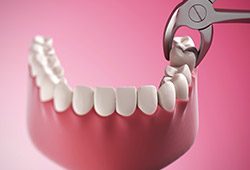
Whether we’re removing one tooth that is impacted below the gumline or several teeth that have broken through, the first step of the process is always the same: to numb your mouth thoroughly. From there, Dr. Gromling will proceed with one of two procedures. The first is a simple extraction, which is when the tooth is rocked loose until it’s ready to be removed. The second is a surgical extraction, which requires us to make a small incision in the gums so we can access the tooth. Then, we can remove it section by section.
Tooth Extraction Aftercare

Following your tooth extraction in Stephens City, our emergency dentist will provide you with detailed aftercare instructions to ensure the healing process goes smoothly. A few examples include:
- Sticking to a soft foods diet
- Using a cold compress for 10 minutes at a time
- Taking prescribed or OTC pain medication as directed
- Brushing carefully around the extraction site
- Keeping your head elevated, including while you sleep
- Avoiding strenuous exercise, like running
As always, if you have any questions for our team, don’t hesitate to give us a call! From there, we can provide answers, ease concerns, and schedule an appointment at our office.
Understanding the Cost of Tooth Extractions

Tooth extractions are never your dentist’s first choice, but sometimes they are needed to preserve the health of the rest of your smile. During your visit with us, we will discuss the cost of your treatment in detail so that you know exactly what to expect. Until then, here are some things for you to take into consideration.
Factors That Can Affect Tooth Extraction Cost

There are several factors that contribute to the cost of tooth extractions. Here are some of the ones that make the greatest difference.
- Number of Teeth: The more teeth that need to be extracted, the higher the overall cost will be.
- Complexity: Depending on where your teeth are located in the mouth and whether they are impacted, the cost can vary. Some extractions are easier to perform than others, which require additional time.
- Tooth Replacement: If you need to replace your extracted tooth, you should consider this cost as well.
Does Dental Insurance Cover Tooth Extractions

Dental insurance providers will usually cover tooth extractions at somewhere between 50% and 80%. However, there could be limits in place or a waiting period before your coverage kicks in. Every plan works a little bit differently, so it is a good idea to confirm this ahead of time so you don’t run into any surprises on your bill. We are familiar with many different plans and in-network with Delta Dental and United Concordia. If you have any questions or concerns regarding your plan and what it covers, don’t hesitate to give us a call!
Tooth Extractions FAQs
Does Getting a Tooth Extracted Hurt?
It can be surprising to hear, but getting a tooth extracted doesn’t hurt. The process is easy, smooth, and painless from start to finish, so you shouldn’t have anything to fear.
The emergency dentist in Stephens City will numb your mouth (with an anesthetic) before the treatment begins. In doing so, they’ll ensure your mouth doesn’t ache or smart from the removal procedure. The most you might feel is a slight pressure as the dental team makes (and later stitches up) a gum incision.
Of course, you’ll likely feel soreness and discomfort after the extraction. (The numbing anesthetic will wear off eventually.) The good news is that this pain is temporary; it should fade within a few days. If it doesn’t, you should contact your dental team right away.
Can I Smoke After Getting a Tooth Extraction?
For the sake of a smooth recovery, you shouldn’t smoke soon after a tooth extraction. Doing so would put your smile at risk and potentially lead to complications.
The truth is that tobacco products – cigars, cigarettes, e-cigarettes, etc. – can harm your oral health. If you use them after your extraction, you’re likely to keep your mouth from healing properly. Your extraction site might even develop an infection, causing pain, gum recession, and worse outcomes.
At minimum, a patient should stop smoking for five days after their treatment. The ideal amount of time would be longer, though; it’d be best if you didn’t smoke for two weeks.
What are My Options for Replacing a Missing Tooth?
Patients often have several tooth replacement options, depending on how many teeth were extracted and where they were located. You’ll thus need to consider which procedure suits you best.
If you’re now missing one tooth (or a single row of teeth), you could try a dental bridge. This device consists of two dental crowns fused to either side of an artificial tooth. Once secured to “abutments” (i.e., nearby natural teeth), it can literally “bridge” the smile gap in your mouth
Another popular tooth replacement option is a denture. The latter works well for patients who’ve had multiple extractions, as it can replace a couple of teeth, an entire arch, or even your whole smile. You’d just need to get the corresponding model – partial, full, implant-based, etc.
Today, dental implants are considered the superior replacement option. They look and feel almost exactly like natural teeth, last for 30+ years with proper care, and are highly durable. Notably, these replacements are the ones that will preserve your jawbone.
How Long Should I Wait to Get Dentures After a Tooth Extraction?
Following a tooth extraction, a patient should wait several weeks before getting a denture. Pursuing treatment any sooner wouldn’t be good for your oral health.
This “wait time” concerns your post-extraction recovery. Your mouth needs time to heal from tooth removal, and it can only handle denture treatment once that process is over. Getting your oral appliance before you’ve healed would just harm your smile more.
Once you’ve finished healing, expect the denture process to take 6-8 weeks. That timeframe covers your dental impressions, the dental lab’s creation of your prosthetics, and a few final adjustments.